FontLab Studio 5 and the Fontographer acquisition

2005 was a pivotal year for Fontlab Ltd. The company shipped FontLab Studio 5, which became the dominant professional font editor for the next decade. FontLab also acquired Fontographer from Macromedia, reviving a tool that had been dormant since the mid-1990s.
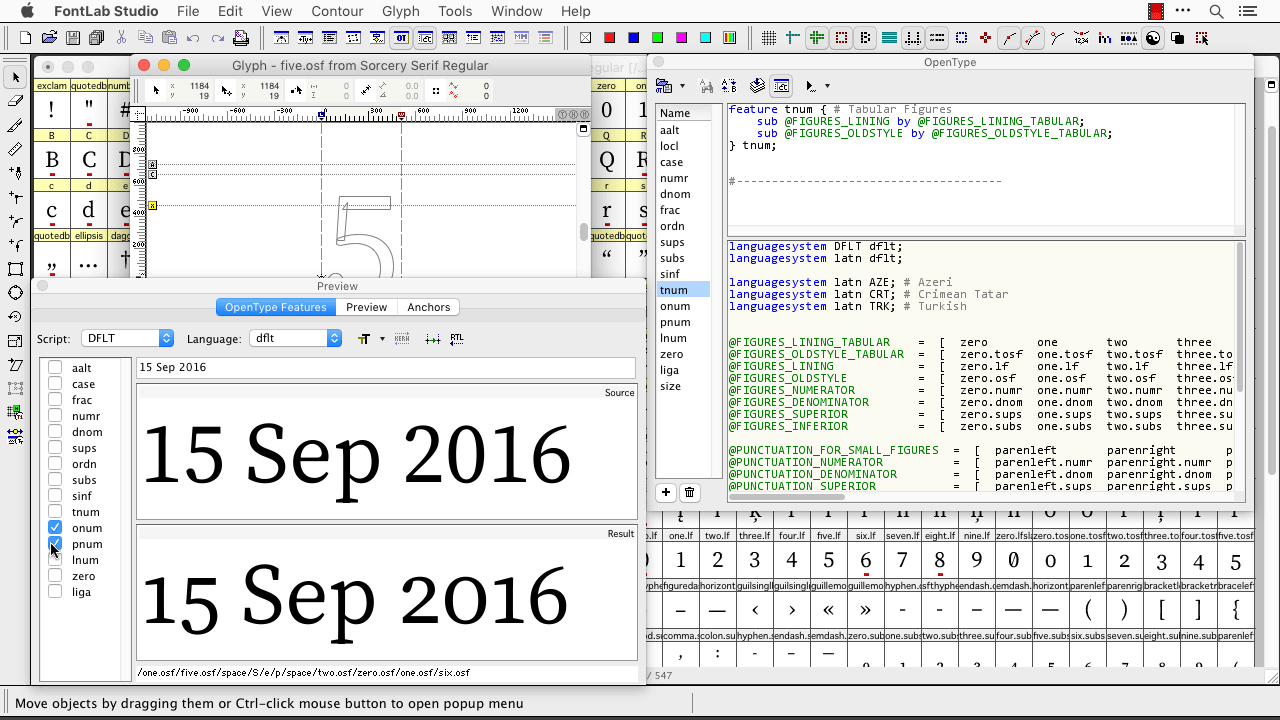
FontLab Studio 5 succeeded FontLab 4. The previous version introduced the first OpenType editing capability in December 2001. Studio 5 refined and extended that foundation. It quickly became the standard for professional type design and font production.
Major tech companies and foundries relied on it for production work, including: * Adobe * Apple * IBM * Microsoft * Monotype * Morisawa
The fonts produced with Studio 5 are in wide daily use. People read them every day. They include Calibri, Candara, Consolas, Myriad Pro, Palatino nova, and PT Sans.
In May 2005, Fontlab Ltd. licensed Fontographer from Macromedia. Fontographer dominated font editing on the Macintosh through the late 1980s and early 1990s. It introduced graphical Bézier font editing to a wide audience. Development stalled after Macromedia acquired it in 1995. FontLab took the rights and resumed development. Fontographer 5 eventually shipped in 2010.
The company released two other tools in 2005: * FontFlasher for pixel font creation. * FogLamp, a utility for converting native Fontographer files into native FontLab files. This provided a practical bridge for studios moving between the two tools.
The OpenType editing work began in FontLab 4 and matured in Studio 5. It gave type designers direct access to the feature code layer of OpenType fonts. Designers could edit ligatures, alternate forms, positional variants, and script-specific rules. They didn’t need separate tools or hand-editing of binary tables.
That capability changed the industry. Combined with class-based kerning and visual TrueType hinting, it made Studio 5 the tool of record for a generation of professional type production.