Scripting the mundane: letting Python do the dishes
Type design is an art form. Font production is a factory job. Once the aesthetic decisions are settled on the core alphabet, you face the unglamorous reality of propagating those decisions across hundreds — sometimes thousands — of glyphs. Doing that by hand is a recipe for repetitive strain injury and existential dread.
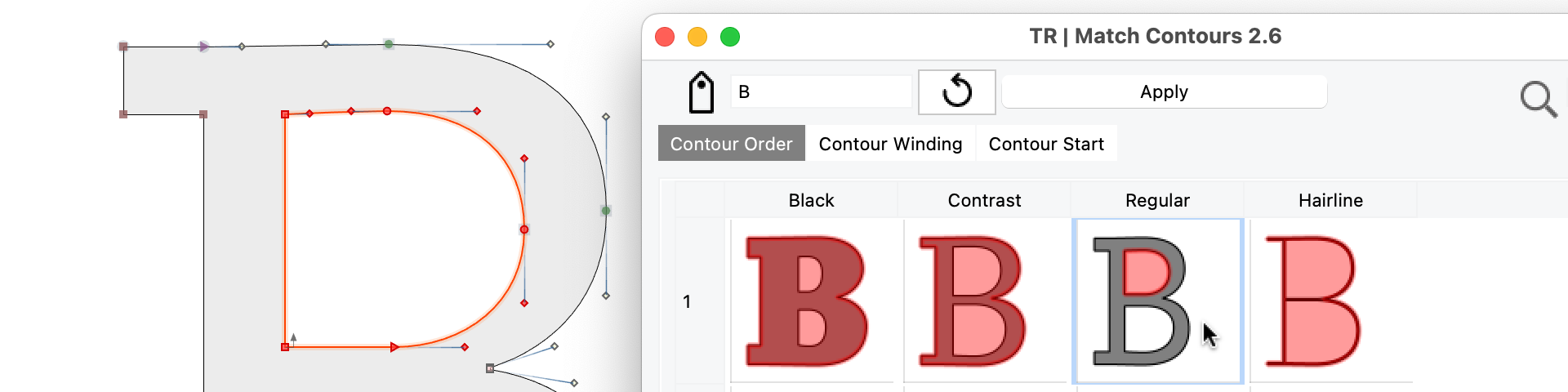
The boring 90%
Open any serious foundry’s production timeline and the visible part — drawing the lowercase, agreeing on the bowl of the ‘a’ — is maybe ten percent of the work. The other ninety is propagation: building the diacritics from a base glyph plus an accent, generating small caps from the lowercase, deriving old-style figures from the lining figures, normalising sidebearings across the family, exporting to a dozen formats with a dozen different naming conventions, syncing the result to a test server, and then running a quality audit before any of it ships.
Doing that by clicking through menus is the wrong shape of solution. It is repetitive, mistake-prone, and impossible to revisit. The right shape is a script — a small piece of code that encodes the decision once and applies it everywhere it needs to apply.
Python 3.11, faster than it looks
FontLab has supported Python scripting for two decades. FontLab 8 took the engine to Python 3.11. The version bump sounds like a chore, but it bought ten to sixty percent faster execution speeds for typical scripts and unlocked the modern Python ecosystem — pathlib, dataclasses, structural pattern matching, all of it. A script written today reads like Python written today, not like 2007.
The API surface is comprehensive. Glyphs, masters, contours, anchors, sidebearings, kerning, OpenType features, font info, export profiles — all addressable from Python, all editable in scripts. The standard pattern is to open a font, walk the glyph set, apply a transformation, save. The unusual pattern is to write a script that runs as part of FontLab’s post-export hook and operates on the file the editor just produced.
TypeRig, the production-grade library
The serious script work in the FontLab world is built on TypeRig, the Python library Vassil Kateliev developed for type-design operations. TypeRig wraps FontLab’s lower-level API in higher-level abstractions: stem-weight adjustments across an entire master, systematic metric changes to every diacritic in the font, custom audit scripts to check for hyper-specific curve anomalies. What would be three hundred lines of menu-driven clicking becomes ten lines of TypeRig.
A representative script: walk every glyph in the font, find the ones whose advance width is below a threshold, and report them. Six lines. Another: open every master, normalise the cap-height anchor, save. Eight lines. Another: regenerate every composite glyph from its base components after a change to one of those bases. Twelve lines. The kind of work that used to consume a Tuesday afternoon now runs in three seconds and produces a log.
Post-export hooks
FontLab 8.3 introduced the ability to run a Python script after the font has finished compiling. The script gets the path to the exported file and can do whatever it likes: rename it according to a foundry’s naming convention, copy it to a staging folder, upload it to a test server, generate a WOFF2 from it via fonttools, push the change to a Git repository, run a regression test against a known-good rendering snapshot.
This is the bit that turns FontLab from a font editor into a node in a build pipeline. The boundary between the type designer’s craft and the production engineer’s craft starts to dissolve. The output of the editor becomes the input of a CI/CD process, with the script as the bridge.
The rule of five
The rule of thumb in any craft that involves a computer: if you find yourself doing the exact same sequence of clicks five times in a row, write a script. The first time costs more than the manual operation. By the third or fourth use, the script is in profit. By the tenth, you have a small library of utilities that other people on the team can also use, and the work that used to be a daily chore is now a Python module someone else maintains.
This applies as much to a one-person foundry as to a corporate type department. The economics are the same; the only difference is who maintains the script library. The aesthetic of FontLab’s scripting environment is to make that library small, readable, and easy to keep.
The moral
The goal of Python in a font editor is to eliminate clicking. The clicks that remain are the ones where a human aesthetic decision needs to happen. Everything else — the propagation, the export, the QA, the deployment — should be running while the human is making coffee. FontLab 8 plus TypeRig is the version of that toolkit that exists today.