Halftone, from Fox Talbot to A Scene in Shantytown
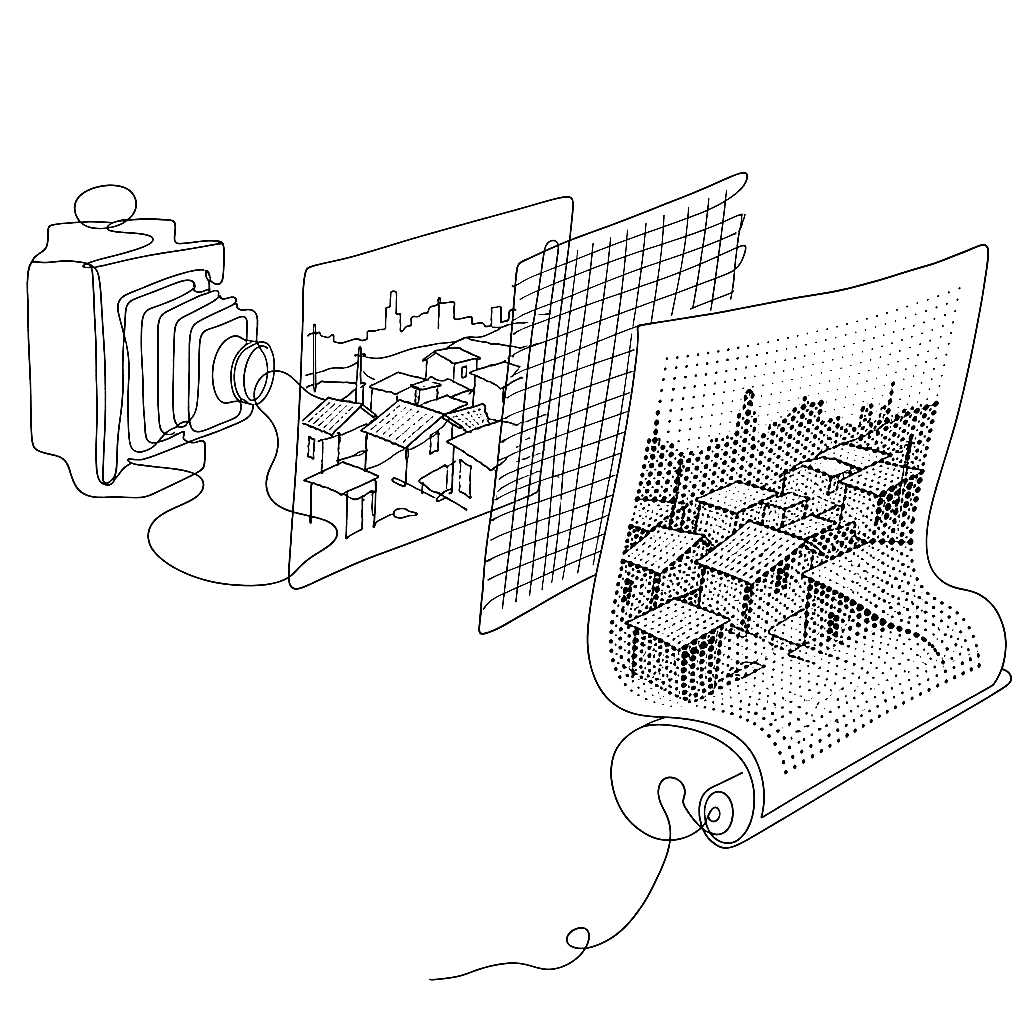
Photography arrived in the 1830s. Printing photographs in newspapers took another fifty years.
William Henry Fox Talbot floated the idea of “photographic veils” in the early 1850s — a fine mesh laid over a photographic plate to break a continuous tone into something a printing press could hold. Presses did not hold continuous tone. Presses held ink or they held nothing. The mesh was a lie the press could believe.
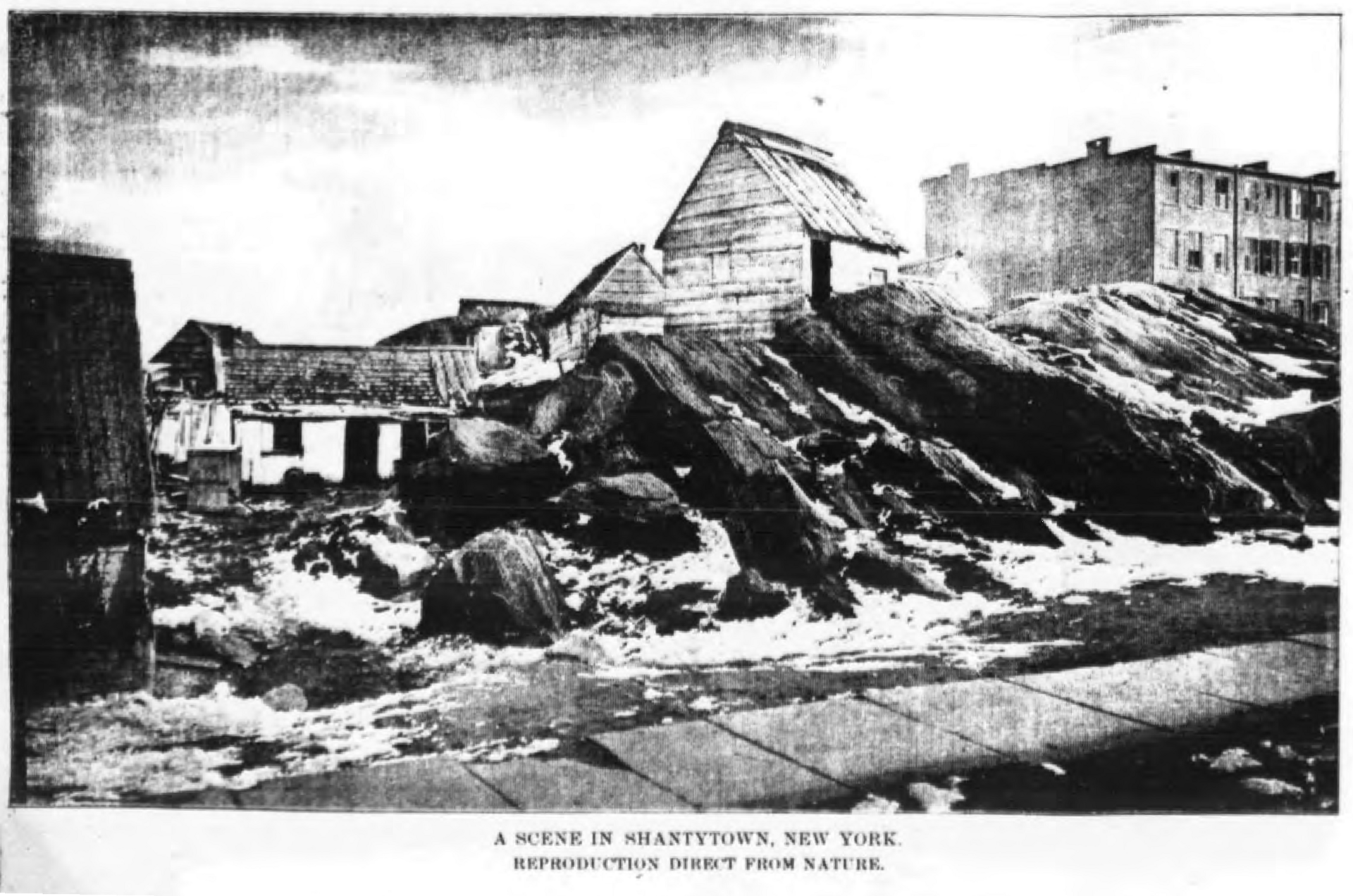
It took another generation to make the lie commercial. Stephen H. Horgan ran the first newspaper photograph — Steinway Hall, unremarkable — in the New York Daily Graphic on December 2, 1873. Seven years later, on March 4, 1880, he ran A Scene in Shantytown, New York: the first full-tone halftone in an American newspaper. Frederic Ives patented a commercially viable method in 1881. Georg Meisenbach’s “Autotypie” followed in Munich in 1882. By 1890 the halftone screen was standard equipment in every serious print shop.
The numbers that drove the next century: newspapers ran around 85 lines per inch, magazines 133–150 lpi, fine art catalogues higher. CMYK colour printing layered four screens at carefully chosen angles — typically 15°, 45°, 75°, 0° — so the dot patterns from each ink wouldn’t fight each other. Get the angles wrong and the page blooms with a rosette nobody ordered.
The screen’s job was always translation. Continuous tone on one side, discrete marks on the other. The marks are not the image; they are a code the eye decodes back into the image. The 1880 broadsheet and a 2026 SVG export are running the same algorithm — different output devices, same deal.
For Vexy Lines, halftone is foundational rather than decorative. When you adjust dot size and frequency in the halftone fill, you are doing exactly what Ives patented in 1881: choosing how much of the continuous tone to throw away, and how much the marks can carry before the lie stops working.
The craft is knowing when to stop.